
Book of the Month
Books featured here are linked through our Amazon.com affiliate program, a simple way to support Lucidcafé while expanding your own library.

September 2026
Sapiens: A Brief History of Humankind
How did one relatively unremarkable animal come to dominate the planet? In Sapiens, Yuval Noah Harari traces humanity’s journey from its evolutionary origins to the modern world, showing how language, imagination, and shared stories enabled strangers to cooperate on an unprecedented scale. Moving across biology, history, religion, economics, and technology, Harari asks whether humanity’s increasing knowledge and power have made us any wiser—or happier. Provocative, accessible, and sweeping in scope, Sapiens is the ideal introduction to the questions and connections that define Harari’s work.

August 2026
The Showman
The Showman traces Volodymyr Zelenskyy’s unlikely path from comedian and television producer to president of Ukraine and wartime leader. Drawing on four years of reporting and extensive access to Zelenskyy, his family, advisers, ministers, and military commanders, Simon Shuster follows him from the entertainment stages of Kyiv to the government compound and front lines of Russia’s invasion.
The book examines how skills developed as a performer—timing, emotional clarity, and an instinct for reaching an audience—became instruments of leadership when Ukraine’s survival was at stake. Shuster presents neither a saint nor a manufactured hero, but a complicated political figure whose strengths, failures, ambitions, and remarkable courage converged at a moment of national crisis.
April 2026
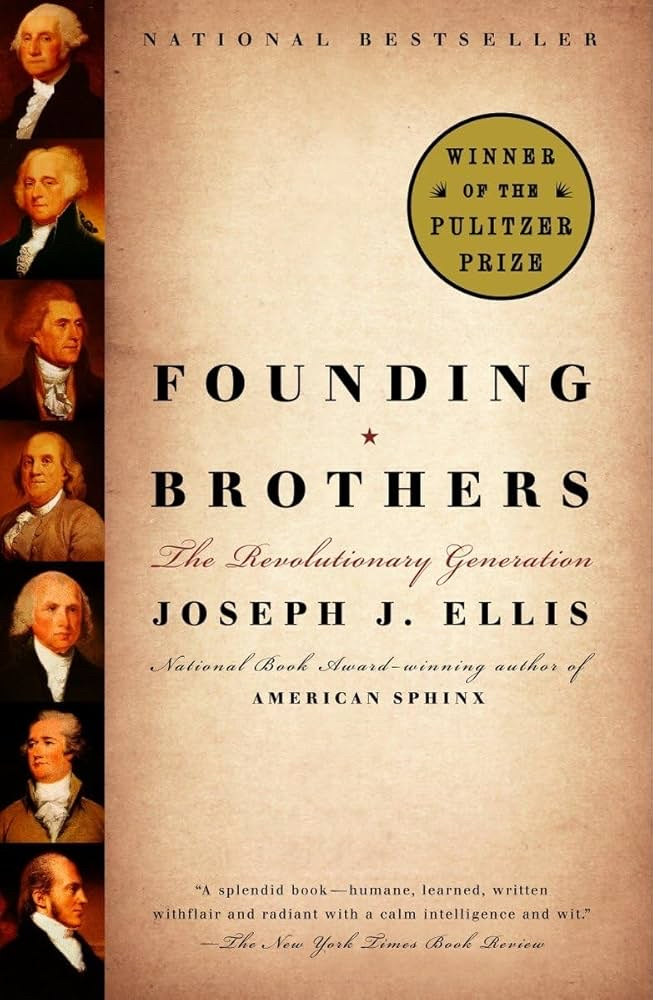
Founding Brothers: The Revolutionary Generation
Joseph Ellis brings the Founding era down from a marble pedestal into the realm of human decision-making. Instead of a sweeping chronology, Ellis focuses on pivotal moments—duels, dinners, debates—where the future of the republic hinged on the judgment of a few men navigating uncertainty, ego, and fragile alliances. The result is a portrait of the American founding not as inevitability, but as a series of contingent, high-stakes choices.
Founding Brothers focuses on relationships. The uneasy partnership between John Adams and Thomas Jefferson, the rivalry between Alexander Hamilton and Aaron Burr, and the quiet authority of George Washington reveal how personality and principle collide at moments of consequence. These are not abstract figures—they are flawed, driven, and often uncertain.
Founding Brothers offers more than history. It’s a study in leadership under pressure, showing how compromise, restraint, and timing can matter as much as conviction.
May 2026
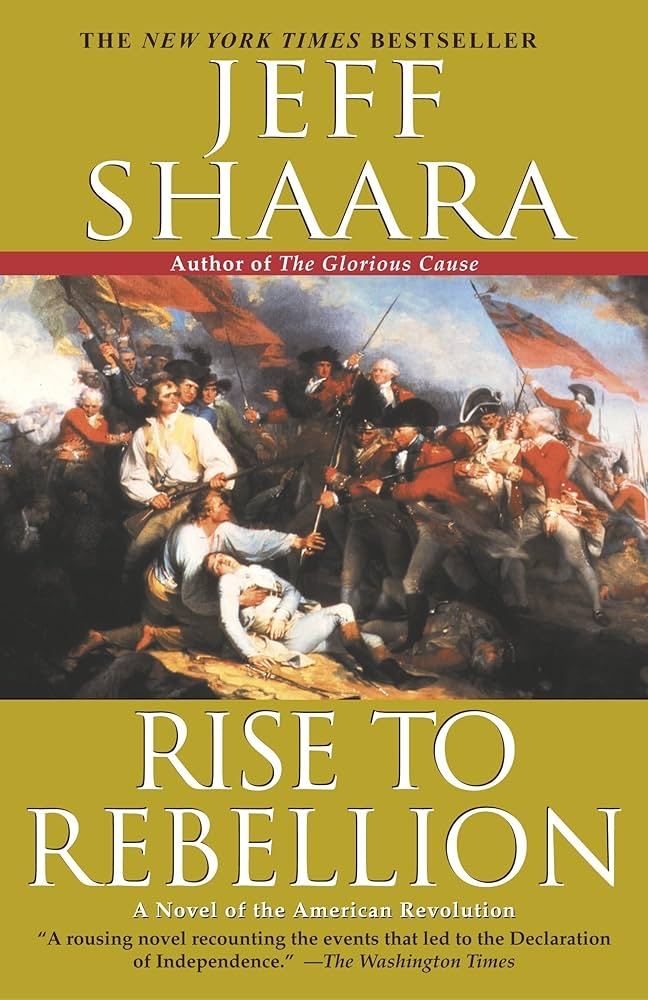
Rise To Rebellion
Jeff Shaara’s novel traces the mounting tension between Britain and the American colonies from the aftermath of the French and Indian War through the outbreak of open conflict at Lexington and Concord. Shaara centers the story on figures such as Benjamin Franklin, John Adams, and Thomas Gage, showing how political miscalculation, miscommunication, and growing mistrust turned grievance into confrontation.
Rise to Rebellion is strongest in its depiction of escalation. Events like the Boston Massacre and the Boston Tea Party are not treated as isolated incidents, but as steps in a chain reaction neither side fully controls. By the time fighting begins, the break feels less like a choice and more like the result of accumulated decisions that left no easy path back.
June 2026
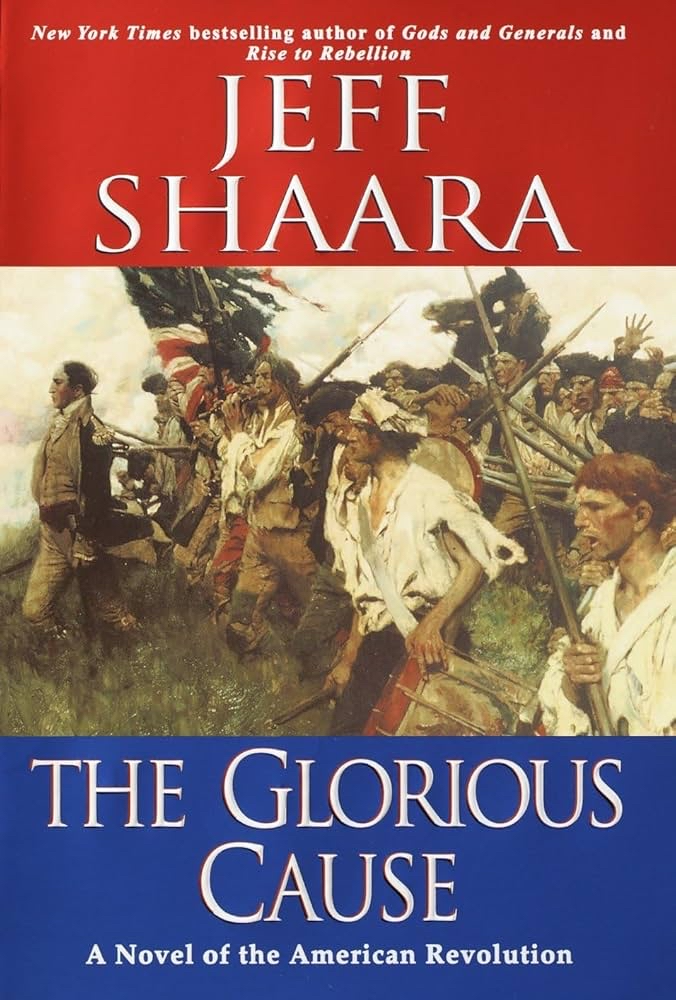
The Glorious Cause
In his sequel to Rise to Rebellion, Jeff Shaara follows the Revolutionary War from its uncertain beginnings through to final victory, with George Washington at the center of the narrative. Shaara captures the strain of command as Washington struggles to hold together an inexperienced army, manage scarce resources, and survive a series of near-defeats that could have ended the rebellion early.
The novel emphasizes endurance over inevitability. From the retreats in New York to the winter at Valley Forge and the eventual triumph at Yorktown, independence emerges not from a single decisive moment but from persistence under pressure. It is a sIntory of leadership sustained over time, where survival itself becomes the central achievement.
July 2026
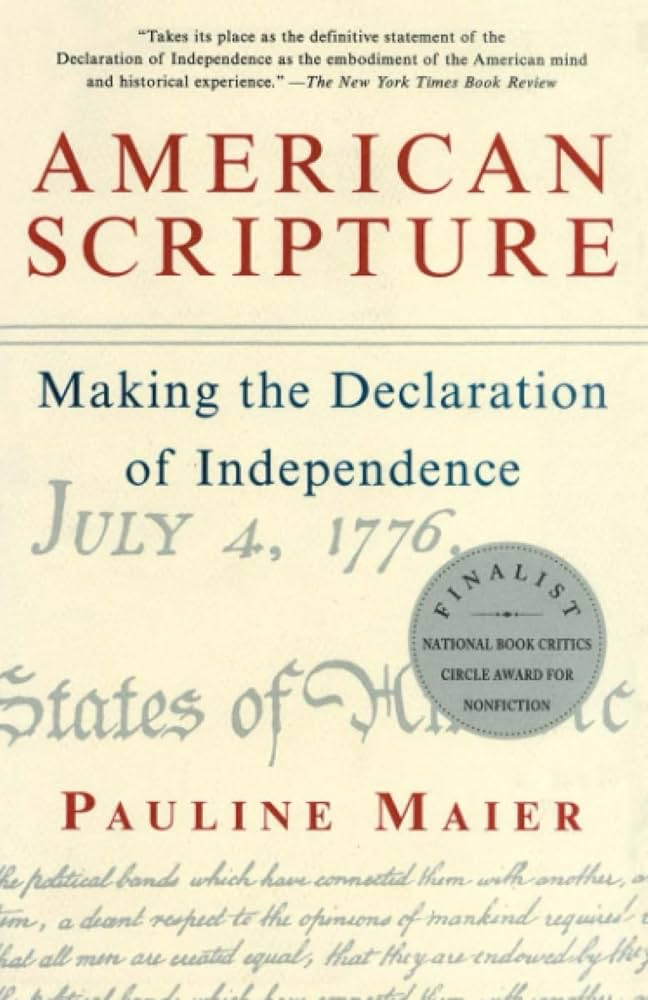
American Scripture: Making the Declaration of Independence
American Scripture focuses on the creation of the Declaration of Independence, tracing how a document often attributed to a single author emerged instead from collaboration, debate, and revision. Pauline Maier places Thomas Jefferson alongside John Adams, Benjamin Franklin, Roger Sherman, and Robert Livingston, showing how the Committee of Five worked within the larger deliberations of Congress to shape both language and meaning.
The book reveals the Declaration not as a finished statement delivered in a single moment, but as a process—drafted, edited, and refined under pressure. Changes made by Congress sharpened its claims and broadened its appeal, transforming it into a document capable of unifying disparate colonies around a shared purpose.