
Jesus of Nazareth
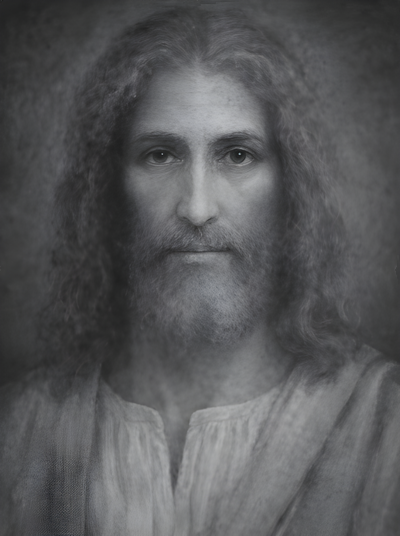
Jewish Teacher and Moral Leader in Roman Judea, c. 6 BCE–c. 30 CE
“Whoever would be great among you must be your servant.”
Jesus of Nazareth emerged from the rural world of Galilee during the early first century, a region shaped by Roman occupation, economic strain, and deep religious expectation. Born into a Jewish family during the reign of Herod the Great, Jesus grew up in a culture steeped in Hebrew scripture, oral teaching, and communal identity. Nazareth itself was a small village, far from the centers of power, where daily life revolved around manual labor, family obligation, and synagogue instruction.
Jesus is traditionally described as a tekton—a craftsman or builder—suggesting years spent working with his hands, participating in village life, and sharing the rhythms of ordinary people. These formative decades, largely undocumented, likely shaped his sensitivity to laborers, debtors, and the landless poor who later populated his teaching stories. Exposure to scripture through synagogue life and public recitation formed the intellectual backbone of his message, while lived experience gave it urgency.
The so-called “lost years” between Jesus’s childhood and public activity have invited speculation. Some scholars suggest contact with ascetic or reform movements such as those associated with John the Baptist or desert communities near the Jordan. Others see no need to place Jesus outside Galilee at all, arguing instead for a long period of internal formation—study, labor, and reflection—within Jewish tradition. What is clear is that when he began teaching publicly, he did so with a command of scripture and moral confidence.
Jesus’s public career unfolded over a brief but intense period. He traveled through Galilean towns teaching in synagogues and open spaces, using parables—short, memorable stories drawn from everyday life—to communicate ethical insight. These stories invited listeners to see familiar realities in unfamiliar ways: wealth as burden, mercy as strength, humility as authority. His message centered on moral transformation rather than ritual compliance, emphasizing compassion, forgiveness, and responsibility toward others.
A defining aspect of Jesus’s influence was his ability to gather and sustain a committed inner circle. The twelve apostles were not elites but fishermen, tradesmen, and tax collectors—men shaped by work rather than education. Jesus led them through proximity rather than hierarchy: walking together, eating together, arguing openly. Jesus modeled the behavior he demanded. This leadership style combined authority with vulnerability, discipline with loyalty.
As his following grew, so did conflict. Jesus’s critique of hypocrisy, his disregard for status boundaries, and his symbolic actions—particularly in Jerusalem—placed him at odds with established religious authorities. His final days reflect the collision between moral challenge and political reality. Arrested and executed by Roman authority, he died as many dissenting teachers did in occupied territories: publicly and decisively.
Jesus left no writings. His legacy survived through memory, storytelling, and the commitment of followers who interpreted his life in light of their own experience. Over time, theological meaning accrued around these memories, eventually forming Christianity. Yet beneath later doctrine remains a historical figure: a Jewish teacher who lived intensely, led personally, and articulated a moral vision that proved durable across cultures and centuries.
Seen historically, Jesus’s story gains force not from inevitability but from choice. He spoke when silence was safer, gathered followers without protection, and confronted systems larger than himself. That human courage—shaped by his time, place, and relationships—is the foundation upon which everything that followed was built.
This account considers Jesus as a historical figure shaped by his time. It does not seek to affirm or deny theological claims, but to clarify the human context in which his life unfolded.
###
Profile originally written December 1995 | Revised February 21, 2026
Resources
Some resources are linked through our affiliate program with Amazon.com. Buying these items is a simple way to support our work while expanding your own knowledge base.
Books
The Historical Figure of Jesus — E. P. Sanders
A rigorous, widely respected reconstruction of Jesus grounded in first-century Judaism.
Jesus: A Revolutionary Biography — John Dominic Crossan
Explores Jesus as a social and ethical reformer within Roman Palestine.
Videos
From Jesus to Christ: The First Christians, Part One — Frontline
Part one of this four-hour series on the rise of Christianity examines how Judaism and the Roman empire shaped Jesus’ life and traces the beginnings of the “Jesus Movement” in those early years before it was called Christianity.
From Jesus to Christ: The First Christians, Part Two — Frontline
Part two of Frontline’s four-hour series.
Jesus Christ | Full Documentary | Biography — This portrait of Jesus Christ focuses on the events that help us understand Jesus the man—the years in the wilderness, his ministry.
Bible Secrets Revealed: The Real Jesus (S1, E4) — History Channel
An investigative documentary episode exploring historical, archaeological, and textual evidence to examine what can be known about the life of Jesus beyond traditional religious narratives.
Websites
Jewish Virtual Library: Jesus — An educational resource presenting Jesus within the context of Jewish history, examining how he is viewed in Jewish scholarship a how his life relates to first-century Judaism.
The Historical Jesus — An essay by Paul F. M. Zahl
Attempts to answer the question of who Jesus was in world history and what he was really like.
The Historical Jesus: Then and Now — By Adela Yarbro Collins
A scholarly essay exploring how historians approach the historical Jesus—tracing how methods and interpretations have evolved over time within academic study.