
Queen Elizabeth I
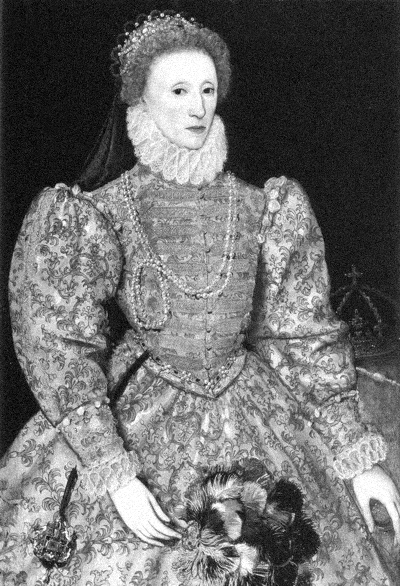
Queen of England, 1533-1603
“I have the heart of a man, not a woman, and I am not afraid of anything.”
Elizabeth I was born on September 7, 1533, at Greenwich Palace, the daughter of King Henry VIII and his second wife, Anne Boleyn. Her earliest years were shaped by sudden reversals: declared princess at birth, she was branded illegitimate after her mother’s execution in 1536 and removed from the succession, then later restored (though still politically vulnerable) alongside her half‑siblings Mary and Edward.
Despite uncertain status, Elizabeth received a humanist education rare even for royalty. Under the guidance of Katherine Parr, Henry’s last queen, and tutors such as Roger Ascham, she mastered Latin, Greek, French, and Italian, read scripture and the classics, and developed a crisp prose style and self‑possession that would become political tools. By her teens, Elizabeth understood that words, ceremony, and image could steady a kingdom.
Henry’s death (1547) brought the boy‑king Edward VI and a Protestant court; Elizabeth navigated carefully. Under Mary I (1553–1558), a Catholic restoration raised suspicions about her loyalties. During Wyatt’s Rebellion (1554) Elizabeth was imprisoned in the Tower and later kept under house arrest at Woodstock—an experience that honed her caution and resolve. When Mary died childless in November 1558, 25‑year‑old Elizabeth succeeded and quickly set out to stabilize church and crown.
Her early settlement (1559) re‑established the Church of England via the Acts of Supremacy and Uniformity, balancing Protestant doctrine with a deliberate civic broadness to contain religious fracture. Elizabeth cultivated via media statecraft: prayer‑book worship, moderate enforcement, and a court culture that prized learning, music, and spectacle. She remained unmarried—playing the “marriage game” with foreign princes and with Robert Dudley, Earl of Leicester at home—leveraging the prospect of alliance while preserving independence.
Security at home increasingly depended on information abroad. Elizabeth’s principal secretary, Sir Francis Walsingham, built a far‑reaching intelligence service in the 1570s–80s. His network of informants, ciphered letters, and double agents penetrated Catholic exile circles and Spanish diplomacy. Walsingham’s team exposed the Babington Plot (1586) to assassinate the queen and place Mary, Queen of Scots on the throne; intercepted letters, decoded by Thomas Phelippes, sealed Mary’s fate. This shadow war—spies, codebreakers, and propaganda—was as vital to the realm as armies and fleets.
Abroad, rival monarchs and shifting alliances defined Elizabeth’s reign. English support for the Dutch Revolt strained relations with Spain; privateers nibbled at imperial treasure routes. In 1588, Philip II launched the Spanish Armada. Fierce Channel weather, nimble English ships, and Spanish miscalculation scattered the invasion fleet. Elizabeth’s command‑performance address at Tilbury fused rhetoric and theatre—“I have the heart and stomach of a king”—into national myth.
At court, letters and drama flourished. William Shakespeare, Edmund Spenser, and court musicians thrived in a milieu that treated learning as statecraft. Yet the 1590s brought strain: war expenses mounted, Irish resistance under Hugh O’Neill surged, harvests failed, and favorites faltered. Robert Devereux, Earl of Essex, once celebrated, blundered in Ireland and led a failed rising (1601), after which he was executed.
Elizabeth died on March 24, 1603, at Richmond Palace. She named James VI of Scotland—the Protestant son of Mary, Queen of Scots—as successor, peacefully uniting the crowns of England and Scotland. When she ascended, England stood fragile and factional; when she died, it had emerged as a European power with a coherent church and a durable sense of national identity.
###
Profile originally written September 1995 | Revised: October 14, 2025
Resources
Some resources are linked through our affiliate program with Amazon.com. Buying these items is a simple way to support our work while expanding your own knowledge base.
Books
The Life of Elizabeth I — Alison Weir
A lively, accessible portrait of the queen’s statecraft and court.
Elizabeth I: Collected Works — eds. Leah S. Marcus, Janel Mueller, Mary Beth Rose
Speeches, letters, poems, and prayers—Elizabeth in her own words.
The Virgin Queen — Christopher Hibbert
A classic narrative overview of Elizabeth’s life and reign.
Elizabeth I, CEO — Alan Axelrod
Leadership lessons drawn from Elizabeth’s political playbook.
Two Queens in One Isle — Alison Plowden
Elizabeth and Mary, Queen of Scots—rivalry, diplomacy, and myth.
Documentaries & Films
Elizabeth I – The Virgin Queen (2005, Masterpiece/WGBH)
A dramatization spanning the 44‑year reign.
Elizabeth (1998, dir. Shekhar Kapur)
Stylized early‑reign biopic starring Cate Blanchett.
Glenda Jackson’s definitive portrayal, from accession to death.
Videos
Websites
A curated bibliography of books and scholarly resources on Elizabeth I from the Renaissance literature archive at Luminarium.
A comprehensive resource page featuring biographies, writings, portraits, historical documents, and links for studying the Tudor queen and the Elizabethan era.
Archive featuring detailed narrative histories, primary documents, portraits, and reference material exploring the politics, court life, and culture of the Elizabethan age.
Elizabeth I’s Speech Against the Spanish Armada
Notable speeches including her famous address to the English troops at Tilbury during the threat of the Spanish Armada.