
Marie Antoinette
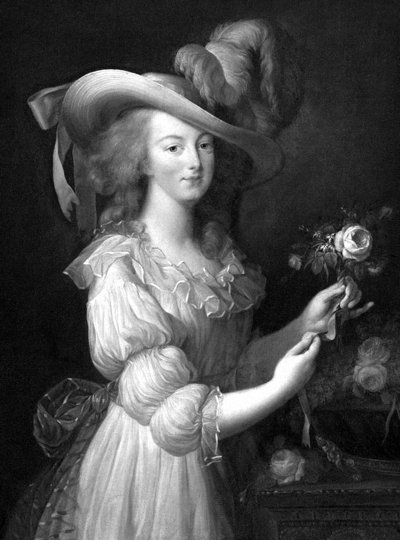
Queen of France during the French Revolution, 1755–1793
“Courage! I have shown it for years; think you I shall lose it at the moment when my sufferings are to end?”
Marie Antoinette was born on November 2, 1755, in Vienna, Austria, at the center of one of Europe’s most powerful dynasties. She entered the world as Maria Antonia Josepha Johanna, the fifteenth child of Empress Maria Theresa and Francis Stephen, Holy Roman Emperor. The Habsburg court was more than a royal household; it was a political machine whose marriages, alliances, and diplomacy shaped the balance of power across Europe.
Her childhood unfolded in the Hofburg and Schönbrunn palaces, where music, ceremony, and politics were woven together. Maria Theresa ruled with intelligence and discipline and expected her children to serve dynastic interests. From an early age Maria Antonia understood that marriage would likely be her political destiny. Her formal academic education was uneven—she struggled with spelling and serious study—but she excelled in music, dance, languages, and court manners. She studied harpsichord and singing, and the composer Christoph Willibald Gluck helped shape her early cultural world.
Even more influential than schooling was the political climate in which she was raised. During Maria Antonia’s youth the geopolitical landscape shifted sharply. France had long been Austria’s rival, but by the mid-eighteenth century both powers saw value in reconciliation. The result was the “Diplomatic Revolution,” in which Austria aligned with France against Prussia and Britain. Maria Antonia became one of the instruments of that strategy.
In 1770, at the age of fourteen, she married the French dauphin, Louis-Auguste, the future Louis XVI. The marriage was first performed by proxy in Vienna and then repeated in person in France. At the border she passed through a symbolic transformation: her Austrian belongings were surrendered and replaced with French clothing and attendants, marking her complete transfer from one dynasty to another.
Versailles was very different from Vienna. The Habsburg court was structured but comparatively functional, while Versailles operated as a stage built on ritual, rank, display, and constant observation. Every action of the young dauphine—what she wore, whom she saw, and which friendships she formed—was interpreted politically. Court factions competed constantly for influence over the royal couple, and the young Austrian princess quickly became a focus of intrigue.
When Louis XV died in 1774, the nineteen-year-old dauphin became Louis XVI, and Marie Antoinette became queen of France. The early years of her queenship were difficult. Her marriage began awkwardly and was subjected to intense public scrutiny, especially because an heir did not arrive quickly. Pamphleteers and gossip writers seized on the delay, mocking both king and queen. In the theatrical world of Versailles, reputation was fragile, and Marie Antoinette’s was already beginning to weaken.
She sought relief from court pressures through private friendships and entertainments. Her closest companions included the Princesse de Lamballe, remembered for loyalty, and later the Duchesse de Polignac, whose circle became associated with favoritism and expense. These relationships mattered deeply to the queen but also gave critics material to portray her as frivolous and manipulative.
Another important figure in her life was Count Axel von Fersen, a Swedish nobleman and military officer. The exact nature of their relationship remains debated, but surviving letters suggest emotional closeness and deep trust. In a court where genuine friendship was rare, such bonds offered Marie Antoinette companionship and counsel.
Her reputation suffered further because royal display carried symbolic weight. Versailles ran on spectacle, and the queen’s love of fashion, theater, and elaborate hairstyles became widely known. In reality, her spending was only a small part of the monarchy’s financial crisis, but she became the most visible symbol of aristocratic excess at a time when France faced debt, resentment, and growing social strain.
As criticism of the queen’s image grew, portraiture became an important tool of royal presentation. In 1778 Marie Antoinette formed a close professional relationship with the painter Élisabeth Louise Vigée Le Brun, who would become her most celebrated portraitist. Vigée Le Brun painted more than thirty portraits of the queen and members of the royal family, shaping how Marie Antoinette was seen both at court and across Europe. Her paintings softened the queen’s image, presenting her not only in formal splendor but also as a mother and private woman. The most famous of these works, Marie Antoinette and Her Children (1787), was intended to counter mounting criticism and portray the queen as devoted to family rather than court luxury.
Two events particularly damaged her public standing. The first was her retreat to the Petit Trianon, a private estate within the Versailles grounds where she tried to escape rigid court ceremony. There she created a rustic “hamlet” for private amusements with friends. Though intended as a retreat, critics portrayed it as proof that the queen preferred fantasy and playacting while the nation suffered.
The second was the Diamond Necklace Affair of 1785, a fraud carried out by political opportunists who falsely claimed to act in her name. Marie Antoinette had nothing to do with the scheme, but the scandal confirmed what many already wanted to believe. By the late 1780s, pamphlets and caricatures had turned her into a symbolic villain of the ancien régime.
When the French Revolution erupted in 1789, her position changed dramatically. The storming of the Bastille and the Women’s March on Versailles forced the royal family to leave their palace and relocate to Paris under revolutionary supervision. The Marquis de Lafayette, hero of the American Revolution and commander of the Paris National Guard, escorted the royal family to the Tuileries Palace and attempted to protect them while promoting a constitutional monarchy—a role that left him distrusted by both the queen and the radical revolutionaries.
During these years Marie Antoinette became more openly political. She worked behind the scenes to preserve the monarchy and corresponded with foreign courts, including her brother, Emperor Leopold II of Austria, hoping outside pressure might stabilize France. Revolutionaries saw these efforts as treason; the queen saw them as desperate attempts to save both her family and the crown.
The Flight to Varennes in 1791 made the break nearly final. The royal family attempted to escape Paris and reach loyalist territory but were captured. The failed escape destroyed what little trust remained between the monarchy and the Revolution. After war began with Austria and Prussia in 1792, suspicion toward the queen deepened sharply.
Later that year the monarchy collapsed. The royal family was imprisoned in the Temple, and Louis XVI was executed in January 1793. Marie Antoinette’s final months were marked by humiliation and loss. Her children were taken from her, including her young son Louis-Charles, whom royalists regarded as Louis XVII. Her close friend the Princesse de Lamballe was murdered during the September Massacres, and the violence of revolutionary Paris made clear that the queen would likely meet the same fate.
On October 16, 1793, after a trial widely regarded as political theater, Marie Antoinette was executed by guillotine at the age of thirty-seven.
Historians have since judged her more carefully. She was neither the monster of revolutionary propaganda nor the flawless martyr of royalist memory. She was a young woman shaped by dynastic expectations and placed within a collapsing political system. Events transformed her from a sheltered archduchess into a determined—though often politically inexperienced—defender of monarchy.
Her story illustrates the danger faced by individuals who become symbols during moments of profound upheaval. In the age of pamphlets and revolutionary journalism, Marie Antoinette became more than a queen. She became a myth—an emblem onto which a nation projected its anger, fears, and hopes for change.
###
Profile originally written November 1995 | Revised March 14, 2026
Resources
Some resources are linked through our affiliate program with Amazon.com. Buying these items is a simple way to support our work while expanding your own knowledge base.
Books
The Private Life of Marie Antoinette — Madame Jeanne Louise Campan
Memoir written by one of the queen’s closest attendants, offering an intimate firsthand account of daily life at Versailles and the personal character of Marie Antoinette.
Marie Antoinette: The Journey— Antonia Fraser
A widely respected modern biography that portrays Marie Antoinette as a complex individual shaped by family, culture, and the political pressures of eighteenth-century Europe.
The Wicked Queen: The Origins of the Myth of Marie-Antoinette— Chantal Thomas
A historical investigation into how pamphlets, scandal literature, and revolutionary propaganda created the enduring legend of the “wicked queen.”
Last Days of Marie Antoinette: An Historical Sketch— Lord Ronald Gower
A classic historical narrative focusing on the queen’s final imprisonment and execution during the most violent phase of the French Revolution.
Marie Antoinette: Princess of Versailles— Kathryn Lasky
A youth-oriented historical narrative that vividly portrays Marie Antoinette’s early years and the emotional challenges of royal life.
Documentaries & Films
Marie Antoinette (2006) — Sofia Coppola
A visually striking film that explores the emotional isolation and youthful experience of the queen inside the ceremonial world of Versailles.
Marie Antoinette— PBS documentary; David Grubin
A historically grounded documentary examining the queen’s life within the larger context of the French Revolution.
Marie Antoinette: Scapegoat Queen
A documentary exploring how political propaganda and scandal literature shaped the queen’s historical reputation.
Videos
Marie Antoinette: The Last Queen of France Before The French Revolution
A short documentary of her life at the court of Versailles, the controversies that shaped her reputation, and her role in the dramatic collapse of the French monarchy during the Revolution.
Marie-Antoinette 's History— Château de Versailles
A historical presentation produced by Versailles historians explaining the queen’s life within the palace environment.
The Truth About “Let Them Eat Cake”
Explains the origins of the famous phrase and why historians believe Marie Antoinette never actually said it.
Websites
Marie Antoinette and the French Revolution — PBS
Educational companion site providing historical essays, images, and teaching materials about the queen and the Revolution.
A long-running historical site containing biographies, timelines, letters, and images related to the queen and her era.
Edmund Burke’s Speech on the Death of Marie Antoinette
The famous reflection by Burke lamenting the queen’s execution and the collapse of traditional European monarchy.
The Trianon Estate at Versailles
Official tourism and historical site explaining the Petit Trianon and the queen’s private retreat at Versailles.