
The Essence of Buddha’s Teaching
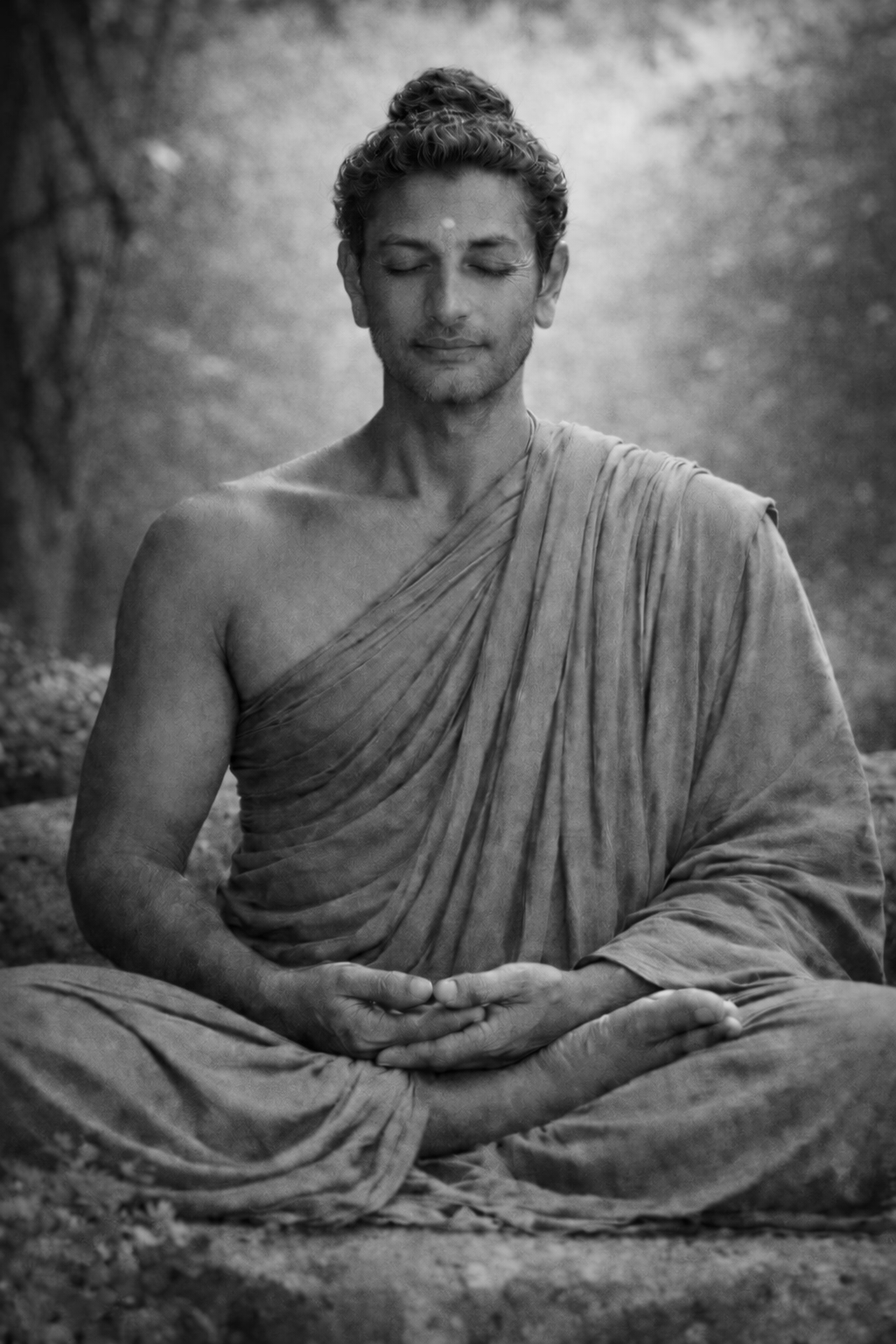
“…when you find that anything agrees with reason and is conducive to the good and the benefit of one and all, then accept it and live up to it.”
— Attributed to the Buddha
Buddha set forth his teaching in the following doctrine.
The Four Noble Truths:
1. All things and experiences are marked by suffering/ disharmony/ frustration (dukkha).
2. The arising of suffering/ disharmony/ frustration comes from desire/ craving/ clinging.
3. To achieve the cessation or end of suffering/ disharmony/ frustration, let go of desire/ craving/ clinging.
4. The way to achieve that cessation of suffering/ disharmony/ frustration, is walking the Eightfold Path.
The eightfold path to the cessation of suffering:
1. Right Understanding of the following facts:
• the truth about suffering … (The Four Truths);
• everything is impermanent and changes;
• there is no separate individual self- this is an illusion. (We are one!)
2. Right Determination to:
• give up what is wrong and evil;
• undertake what is good;
• abandon thoughts that have to do with bringing suffering to any conscious being; cultivate thoughts of loving kindness, that are based on caring about others’ suffering, and sympathetic joy in others’ happiness.
3. Right Speech:
• Abstain from telling lies.
• Abstain from talk that brings harm or discredit to others (such as backbiting or slander) or talk that creates hatred or disharmony between individuals and groups.
• Abstain from harsh, rude, impolite, malicious, or abusive language.
• Abstain from idle, useless, and foolish babble and gossip. Abstain from recrimination and negative statements.
• Abstain from harsh speech—practice kindly speech.
• Abstain from frivolous speech—practice meaningful speech.
• Abstain from slanderous speech—practice harmonious speech.
• Speak the truth if it is useful and timely. Practice only necessary speech. Let your speech be filled with loving kindness. Speak that which alleviates suffering.
4. Right Action:
• Peaceful, honorable conduct; abstain from dishonest dealings; take concrete steps necessary to foster what is good.
• Do things that are moral, honest, and alleviate suffering. Do not do things that will bring suffering to others or yourself.
5. Right Livelihood:
• Abstain from making your living from an occupation that brings harm and suffering to humans or animals, or diminish their well being. This includes: activities that directly harm conscious beings, and activities that indirectly harm sentient beings, e.g., making weapons or poisons.
6. Right Effort:
• Foster good and prevent evil;
• Work on yourself—be engaged in appropriate self-improvement. The essence of right effort is that everything must be done with a sense of proper balance that fits the situation. Effort should be balanced between trying too hard and not trying hard enough. For example, strike the balance between excessive fasting and over-indulgence in food. Trying hard to progress too rapidly gets poor results, as does not trying hard enough.
7. Right Mindfulness or wakefulness:
• Foster right attention.
• Avoid whatever clouds our mental awareness (e.g., drugs).
• Systematically and intentionally develop awareness.
8. Right Concentration:
• Developed by practicing meditation and/or mental focusing. Proper meditation must be done continuously while awake, and should include work on awareness of body, emotions, thought, and mind objects.
Five basic precepts:
1. Abstain from killing living beings (from destroying/taking life)— or practice love.
2. Abstain from taking the not-given (from stealing)—or practice generosity, practice giving.
3. Abstain from sexual misconduct —or practice contentment.
4. Abstain from false speech (from lying)—or practice truthfulness.
5. Abstain from taking intoxicating drinks—or practice awareness and mental clarity.
Buddha said:
Do not believe in anything simply because you have heard it. Do not believe in traditions because they have been handed down for many generations. Do not believe anything because it is spoken and rumored by many. Do not believe in anything because it is written in your religious books. Do not believe in anything merely on the authority of your teachers and elders. But after observation and analysis, when you find that anything agrees with reason and is conducive to the good and the benefit of one and all, then accept it and live up to it.
The following prose, from a modern devotional compilation, expresses poetically how the Buddha may have perceived the world.
Buddha said:
• I consider the positions of kings and rulers as that of dust motes.
• I observe treasures of gold and gems as so many bricks and pebbles.
• I look upon the finest silken robes as tattered rags.
• I see myriad worlds of the universe as small seeds of fruit, and the greatest lake in India as a drop of oil upon my foot.
• I perceive the teachings of the world as the illusions of magicians.
• I discern the highest conception of emancipation as a golden brocade in a dream, and view the holy path of the illuminated ones as flowers appearing in one’s eyes.
• I see meditation as a pillar of a mountain, nirvana as a nightmare of daytime.
• I look upon the judgments of right and wrong as the serpentine dance of a dragon, and the rise and fall of belief as traces left by the four seasons.
###
Content originally compiled in June 1996 | Updated February 27, 2026
Resources
Some resources are linked through our affiliate program with Amazon.com. Buying these items is a simple way to support our work while expanding your own knowledge base.
Summary of Buddha’ Life
Books About Buddha
The Long Discourses of the Buddha: A Translation of the Digha Nikaya (Teachings of the Buddha) —Maurice Walshe (Translator)
Thirty-four discourses that are among the oldest records of the Buddha’s original teachings. An invaluable collection of teachings that reveal his gentleness, compassion, and wisdom.
The Way of Zen — Alan W. Watts
Watts follows Buddhism through the development of the early Mahayana school, and then the birth of Zen from Buddhism’s marriage with Taoism. He concludes with Zen’s unique expression in Japanese culture.
Awakening the Buddha Within: Tibetan Wisdom for the Western World — Lama Surya Das
Covers the traditional three trainings for enlightenment: ethics, meditation, and wisdom. Includes all the major concepts of Tibetan Buddhism from the Eight Steps to Enlightenment to the Six Principles of Enlightened Living, setting them in the context of Western civilization, and showing how this wisdom can be integrated into life here and now.
Before He Was Buddha — Hammalawa Saddhatissa
This biography portrays Buddha, first as a boy named Siddhartha, then as a man who leaves home in search of truth, and finally as an elderly teacher.
Buddha: Life and Work of the Forerunner in India — Maurice Walshe (Translator)
This book documents the travels and experiences that led Siddhartha to the enlightenment. Filled with images of rural India’s wilderness, animals, people, and legends.
Jesus and Buddha: The Parallel Sayings — Ray Riegert (Editor)
Jesus and Buddha were separated by five hundred years, three thousand miles, and two drastically different cultures. Yet this book juxtaposes passages from the New Testament and ancient Buddhist scriptures to illuminate the striking similarity between their lives, deeds, and teachings.
Documentaries about Buddha/Buddhism
Reveals the fascinating story of Prince Siddhartha and his spiritual transformation into the Buddha.
Zen Buddhism: In Search of Self
This beautifully produced documentary follows two dozen Zen Buddhist nuns as they practice a 1000-year old tradition of 90-day fasting, meditation and contemplation, seeking enlightenment.
A great introduction to Tibetan Buddhism.
A set of four videos that collect a series of lectures on the Four Noble Truths given by His Holiness the XIV Dalai Lama in 1997 in England. Each of the four videos includes a brief introduction by Tibetan Buddhism scholar Robert Thurman, who contextualizes the lectures within the many Buddhist traditions.
Videos
What Is ENLIGHTENMENT? | The BUDDHA’s Discovery Explained
Explores the concept of enlightenment as taught in early Buddhist tradition, emphasizing that awakening is not about extraordinary visions but about perceiving everyday reality without distortion.
Zen Meditation observing the moment
A brief instructional video demonstrating Zen meditation practice, focusing on posture, breath, and the disciplined awareness of the present moment.
Ten lessons from the Buddha.
Websites
BuddhaNet — Buddhist Information Network
BuddhaNet is a comprehensive online Buddhist information network offering free teachings, eBooks, articles, guided meditations, and resources covering multiple Buddhist traditions for both beginners and advanced practitioners.