
Édouard Manet
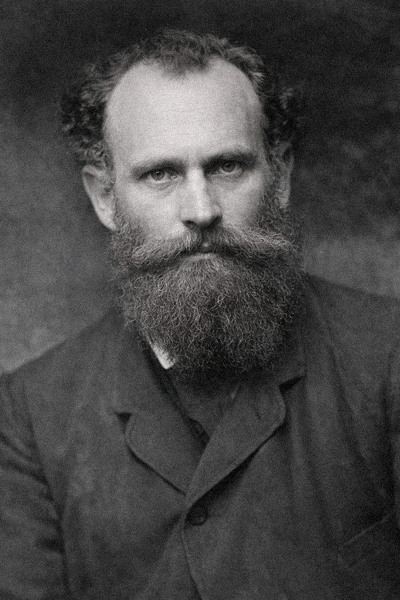
French Painter and Bridge Between Realism and Impressionism, 1832–1883
“The main thing is to be moved, to love, to hope, to tremble, to live.”
Édouard Manet was born on January 23, 1832, in Paris, into a prosperous and well-connected household. His father, Auguste Manet, held a senior position in the Ministry of Justice. His mother, Eugénie-Désirée Fournier, brought refinement, music, and social polish into the home.
That background mattered. Manet grew up within the codes of bourgeois confidence, ceremony, and restraint. He learned how cultivated people dressed, posed, and watched one another. He also saw how carefully appearances were managed. When he later painted modern Paris, he painted that world from the inside. He understood both its elegance and its evasions.
As a boy, Manet was not a disciplined student. He was drawn instead to drawing and observation. At school he cared little for routine study except for the drawing course. He noticed surfaces, gestures, and the way public life staged itself. That habit of looking stayed with him. He did not approach modern life as a moralist or reformer. He observed it closely, attentive to the tension between what people presented and what their faces or bodies quietly revealed.
His father hoped he would pursue law or government service. For a time the family pushed him toward a naval career as a respectable alternative to art. Manet failed the naval entrance examination twice. Between those attempts he sailed as an apprentice pilot on a training voyage in 1848–49.
Travel widened his horizon. Life at sea exposed him to hierarchy, uniforms, weather, and the restless movement of ships and crews. It also gave him distance from Parisian expectations. The voyage did not turn him into a sailor. Instead, it clarified that he would not live inside a career chosen for him by others.
Once his family relented, Manet began formal art training in Paris in 1850 under the academic painter Thomas Couture. Couture provided rigorous instruction in drawing and composition. Yet teacher and student differed in temperament and ambition. Manet absorbed technique, but he did not become an obedient academic painter.
During these years he spent long hours copying paintings in the Louvre. He studied works by Titian, Velázquez, and other masters. He also traveled through the Netherlands, Germany, and Italy. These experiences sharpened his eye. He was not simply collecting influences. He was learning how great paintings were built. The Old Masters taught him economy, structure, and how a picture could command attention without excessive explanation.
People shaped his development as much as travel. In the 1850s Manet befriended Henri Fantin-Latour and later met Edgar Degas. He moved within a younger generation of artists and writers who were dissatisfied with polished official art. Among them was the poet Charles Baudelaire, whose essays argued that modern life itself could be a serious subject for art.
Baudelaire did not teach Manet technique. Instead, he helped clarify a challenge. How could an artist paint the present without disguising it as mythology or history? Manet increasingly believed that contemporary life—cafés, boulevards, musicians, workers, and social encounters—deserved the same seriousness once given to heroic subjects.
His private life also shaped him. Suzanne Leenhoff, a Dutch-born pianist who later became his wife, provided stability through years of criticism and controversy. Manet’s life was not the stereotype of the isolated genius. He worked within a network of family, friendships, and recurring social circles—even when those same circles became subjects of uneasy modern paintings.
His notoriety began in the early 1860s. In 1861 he received an honorable mention at the Salon for The Spanish Singer. Yet his hopes for easy acceptance collapsed in 1863. That year Le Déjeuner sur l’herbe was rejected by the official Salon and displayed instead at the Salon des Refusés.
The reaction was explosive. Critics objected not only to the subject but also to the paint itself. They saw abrupt transitions, flattened forms, and a refusal to idealize the scene. Manet was not trying to shock for its own sake. He was removing the polite distance that allowed viewers to look without feeling involved.
Travel again deepened his work. In 1865, shaken by the controversy surrounding Olympia, he traveled to Spain. There he studied the work of Velázquez and Goya. Spanish painting confirmed his admiration for bold tonal contrasts and direct visual authority. Spain did not change his identity as a French painter. It strengthened his preference for strong silhouettes, stark light, and images that assert themselves rather than persuade.
During the later 1860s and 1870s, Manet’s circle expanded around the Café Guerbois, where artists and writers debated the future of painting. He became close to Berthe Morisot, who later married his brother Eugène. He also developed a complex friendship with Claude Monet, despite an awkward first meeting.
In 1874 Manet painted alongside Monet and Renoir at Argenteuil. Their outdoor painting and brighter palette influenced him. Yet he never fully joined the Impressionist exhibitions. Manet still wanted recognition from the official Salon. He preferred to challenge the institution from within rather than abandon it.
This position placed him between worlds. He was trained in tradition but committed to painting modern life. He stood close to the avant-garde but still sought acceptance from the art establishment. His paintings balanced these tensions, combining classical structure with contemporary subjects.
Late works such as A Bar at the Folies-Bergère show the maturity of this vision. By then Manet had become a master of modern ambiguity. Mirrors distort space. Figures appear composed yet emotionally distant. Public spaces reveal quiet isolation beneath their glitter.
Illness increasingly limited him during his final years. Even so, his artistic intelligence never faded. As his health declined, his work became more concentrated and refined.
Édouard Manet died in Paris on April 30, 1883. By then the artistic battles he had helped ignite were already reshaping painting. He did not found Impressionism, but he made modern painting possible. He gave artists permission to treat the present as worthy of serious art and to allow paint itself to remain bold, visible, and unapologetically direct.
###
Profile originally written January 1996 | Revised March 8, 2026
Resources
Some resources are linked through our affiliate program with Amazon.com. Buying these items is a simple way to support our work while expanding your own knowledge base.
Books
Edouard Manet: Rebel in a Frock Coat — Beth Archer Brombert
A biography that places Manet’s private life and public provocations inside the social rules of Second Empire and early Third Republic Paris.
Manet: A New Realism— David Spence & Tessa Krailing
A compact, approachable introduction that connects Manet’s realism to the broader break toward modern painting.
Manet’s Le Déjeuner Sur L’Herbe — Paul Hayes Tucker (ed.)
Scholarly essays on one of the most debated images in modern art, examining style, subject, and cultural context.
Videos
Édouard Manet, Olympia (and now, with Laure) — Smarthistory
Examines Manet’s Olympia, exploring how the painting challenged traditional depictions of the nude while also highlighting the often-overlooked presence and significance of Laure, the Black servant who stands beside Olympia.
Manet, Le Déjeuner sur l’herbe — Smarthistory
Explains how Manet’s Le Déjeuner sur l’herbe shocked the Paris art world by placing a modern, confrontational nude within a contemporary setting, challenging traditional expectations of subject and style in painting.
Manet, A Bar at the Folies-Bergère — Smarthistory
Explores Manet’s A Bar at the Folies-Bergère, analyzing its complex mirror reflections and how the painting captures the layered social life and subtle alienation of modern Paris.
Manet and Impressionism — Smarthistory
Video created in collaboration with the Musée d’Orsay that examines Manet’s relationship to Impressionism, showing how his work helped open the path toward modern painting while remaining distinct from the Impressionist movement itself.
Manet & Modern Life — Getty Museum lecture
A Getty Museum lecture exploring how Manet’s paintings captured the social tensions, leisure spaces, and shifting identities of modern Paris, helping redefine what subjects were worthy of serious art.
Websites
National Gallery of Art: Édouard Manet
A National Gallery of Art artist page presenting a concise biography of Édouard Manet along with images and commentary on works in the museum’s collection.
The National Gallery (London): Édouard Manet
The National Gallery’s artist page on Édouard Manet provides a concise biography and highlights key works in the museum’s collection, explaining his role in the transition from Realism to modern painting.
The Metropolitan Museum of Art: Édouard Manet
The Metropolitan Museum of Art’s Heilbrunn Timeline essay on Édouard Manet examines his life, major works, and his pivotal role in bridging traditional academic painting and the emergence of modern art.
Musée d’Orsay: Édouard Manet — The Man Who Invented Modernity
The Musée d’Orsay exhibition page Édouard Manet: The Man Who Invented Modernity explores how Manet’s bold subjects and innovative painting style helped redefine art for the modern age.